Seeds, Soils, Wheat, and Weeds
From the series The Bible Is Not Literal, published by Memra.
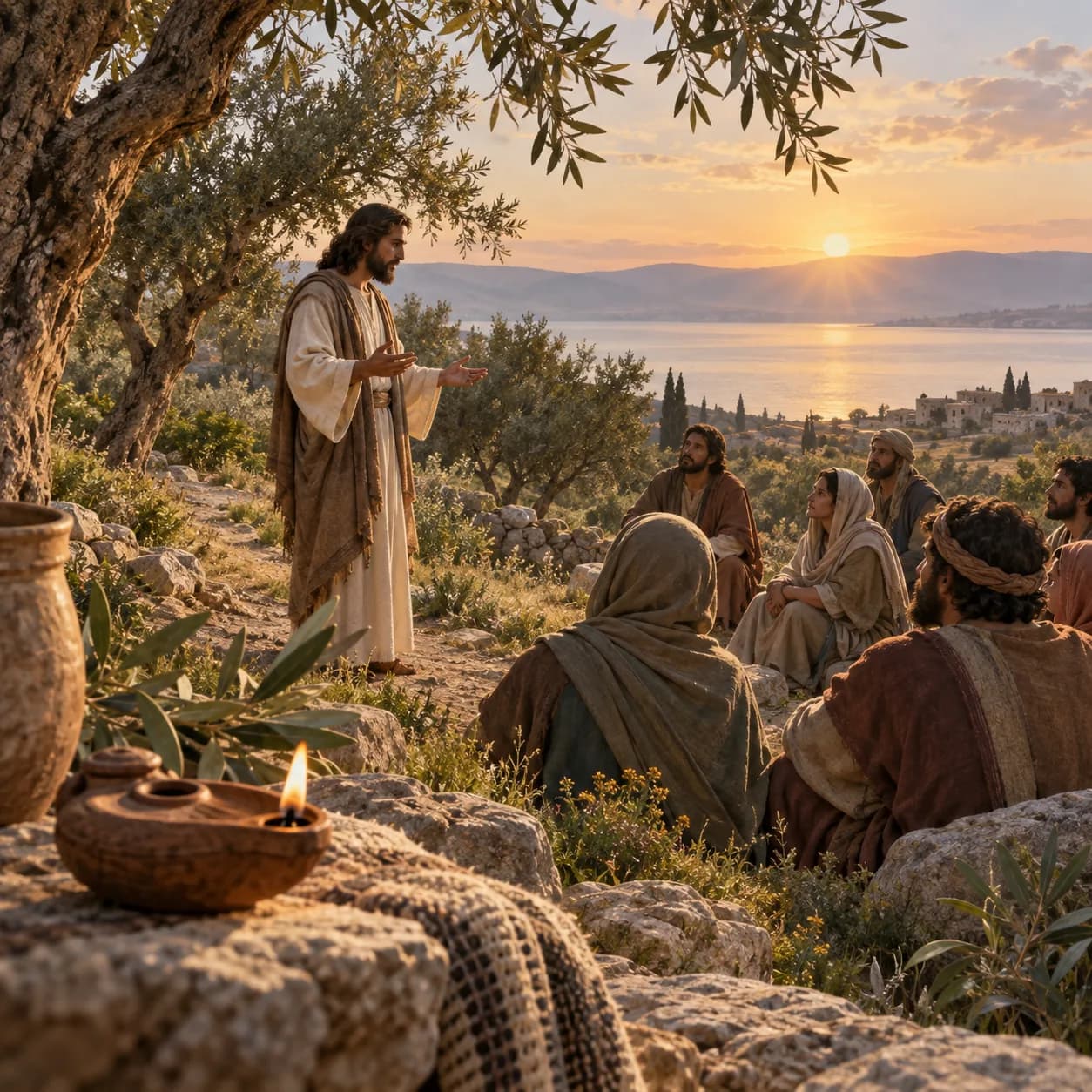
By The Roadside
A first-century farmer did not plant in tidy rows. He walked across the field scattering handfuls of seed broadly, knowing that some would fall where it shouldn't — on the packed strip where feet and wheels passed, in the thin layer of soil over rock, in the corner overrun by thorns. This wasn't incompetent waste; it was simply the method available. Jesus chooses precisely this image, so ordinary that no one would need it explained, to speak of something that isn't agricultural at all. The question the parable of the sower raises isn't "how to plant better" but "why the same word, offered to everyone, produces such different lives." And the answer the text suggests is unsettling: the problem is rarely the seed.
Mark 4 tells the story with remarkable economy. Four soils, four fates. The path doesn't even let the seed sink in — birds eat it before it can germinate. The rock allows quick growth and quick death, for lack of depth, "it had no root" (Mark 4:6). The thorns let the plant grow, but choked, with no room to breathe. Only the good soil yields fruit, and the text refuses a single figure: thirty, sixty, a hundredfold. This final variation matters: even among those who receive the word well, fruitfulness isn't uniform. The parable doesn't promise a standardized outcome for those who "get it right"; it describes a spectrum.
What It Means To Hear
Mark insists on the verb *hear* with a repetition that becomes almost obsessive across chapter 4. This isn't about catching a sound but about letting something penetrate and remain. Luke makes explicit the link between good soil and perseverance: "those who, having heard the word, hold it fast in an honest and good heart, and bring forth fruit with patience" (Luke 8:15). The word that saves is not the one most heard, but the one most kept. This shifts the parable's center of gravity: it doesn't sort good people from bad people at the moment of first hearing, but describes what happens afterward — whether the word survives the shallowness of enthusiasm, the pressure of persecution, the competition of other concerns.
Matthew expands this explanation and calls it "the word of the kingdom" (Matthew 13:19), adding the idea of understanding: whoever hears and understands is the one who bears fruit (Matthew 13:23). The difference among the Gospels is subtle but real — Mark and Luke emphasize endurance, Matthew adds the intelligence of what was heard. None of the three, however, treats the four soils as fixed identities assigned in advance to certain types of people. The image is dynamic: it speaks of processes, not sealed destinies. A path could, in theory, be plowed; a rock could be removed; thorns could be cut back. The parable describes conditions, not sentences.
A Field Invaded By Night
Matthew, and only Matthew, adds another story that seems to continue the first but shifts the problem. Here the issue is no longer how the word is received, but how good and evil coexist after the seed has already taken. A man sows wheat in his field. At night, while everyone sleeps, an enemy sows weeds among the wheat and slips away unseen (Matthew 13:25). The malicious act is discreet, opportunistic, almost invisible — no one notices the crime as it happens. Only when the plants grow do the servants notice the mixture and rush to the owner with the obvious question: should we pull up the weeds?
The master's answer is the turning point of the whole parable, and perhaps of the entire chapter: "No, lest in gathering the weeds you root up the wheat along with them. Let both grow together until the harvest" (Matthew 13:29-30). It's a deliberate refusal of immediate purification, grounded not in indifference but in calculated risk: at that stage of growth, wheat and weeds resemble each other closely enough that pulling one risks the other. The decision doesn't stem from complacent tolerance of evil, but from recognizing that the human capacity to discern precisely, under pressure and in the heat of the moment, is limited. Final separation is reserved for another moment and other agents: "at harvest time I will tell the reapers, Gather the weeds first... but gather the wheat into my barn" (Matthew 13:30).
When The Explanation Comes From Within
What makes this chapter distinctive is that Matthew doesn't leave the image open to free speculation. Jesus himself, privately with the disciples, supplies the keys: the sower is the Son of Man, the field is the world — not the church, not a nation, not a sect — the good seed are the children of the kingdom, the weeds are the children of the evil one, the enemy is the devil, the harvest is the end of the age, the reapers are angels (Matthew 13:37-39). This detailed correspondence is rare among the Gospel parables, and for that reason deserves special attention: here, at least, the text doesn't leave the reader to guess at the code alone.
This internal clarity resolves a common dispute. Many readers, especially in church contexts, apply the parable exclusively to the coexistence of true and false members within a congregation — as though the field were the church and the weeds, the hypocrites in the assembly. It's a pastorally understandable reading, but Matthew himself rules it out by explicitly stating that "the field is the world." The parable speaks of something larger than a community's internal discipline: it speaks of the moral texture of history itself, where genuine good and disguised evil grow side by side until a point no servant has authority to anticipate.
The Resemblance That Deceives
It's worth noting why the image works so well. In its early stages of growth, the weed closely resembles wheat visually — this is why the servants only notice the problem once the plants are further along, and why pulling them up hastily would become a genuinely risky operation, not a simple cleanup. The precise botanical identification of the species mentioned is debated among commentators, but the parable doesn't depend on that precision to work theologically. What matters is the moral logic built on the agricultural observation: the false can imitate the true long enough to make any premature judgment dangerous.
This doesn't mean the distinction between good and evil is illusory, nor that the church should suspend all practical judgment about concrete conduct. The parable addresses a specific judgment — the final verdict on who belongs to the kingdom and who doesn't — and refuses to let that verdict be seized by impatient servants in the middle of history. It doesn't address fraternal discipline, the denunciation of abuse, or the protection of victims, matters governed by other passages and another logic. Conflating these two planes is the most common and most dangerous error in applying this text: turning a parable about eschatological patience into a justification for inaction in the face of concrete evil that wounds real people.
Two Stories, One Question
Read together, the parable of the sower and the parable of the wheat and weeds form a sequence of questions that complete one another. The first question concerns reception: why doesn't the same word of the kingdom produce the same fruit in everyone? The answer points to the conditions of the heart — shallowness, fear of persecution, the seduction of material concerns — without ever blaming the word itself. The second question concerns coexistence: why does the kingdom, even after being successfully planted, remain surrounded by what imitates and contradicts it? The answer points to a deliberate time of waiting, ordered not by weakness but by the authority of the one who knows how to separate when the hour comes.
What unites the two stories is a refusal of easy triumphalism. Neither promises that the kingdom will assert itself in a visible, immediate, uncontested way. The seed will be rejected, choked, lost in hostile ground. The wheat will grow entangled with the weeds until history's end. This is not pessimism — it is theological realism about how the divine acts within human time, without overriding freedom or preempting the judgment that belongs to God alone.
There's a detail in the parable of the weeds that often goes unnoticed: the servants don't ask *whether* to act, but *how*. "Do you want us, then, to go and gather them?" (Matthew 13:28) is the question of people ready to work, zealous for the purity of the field, rightly troubled by the presence of what shouldn't be there. The text doesn't rebuke them for their indignation or their desire to set things right; the master's order carries no criticism of the servants' zeal. What he corrects is the method and the timing, not the motive. This distinction is fine but decisive: the parable doesn't teach passivity toward evil as a virtue in itself; it teaches that there's a difference between recognizing evil — which the servants do correctly, with sharp discernment — and possessing the authority and precision needed to eliminate it without collateral damage. The servants see the weeds; what they lack isn't vision, but the kind of certainty that belongs only to the one who planted the field.
This refusal of premature separation carries even more weight when compared to the final fate of each plant, as Jesus himself describes it in his private explanation: the weeds will be gathered first and burned, the wheat will be gathered into the barn (Matthew 13:30). The order of the harvest — weeds before wheat — inverts the logic one might expect from a cautious cleanup, in which what one wants to preserve is normally protected first. Here, the text suggests something firmer: the judgment of evil is not postponed out of weakness or hesitation; it is postponed because its execution demands a precision only the final harvest possesses. The delay doesn't diminish the seriousness of the verdict — on the contrary, the verdict described is definitive and unambiguous, with radically opposite fates for plants that, months earlier, a hasty eye could barely distinguish. The owner's patience doesn't arise from indifference to the outcome; it arises from certainty that the outcome will come — and will come complete.
This waiting, then, has a clear direction, even if its duration remains hidden from those living within it. The field continues to be tended, rain falls on wheat and weeds alike, and no servant receives the harvest calendar. It's precisely this gap in information — knowing that the separation will come, without knowing when — that makes the master's instruction so demanding in practice. The servants are asked to keep caring for the whole field, without staging the harvest ahead of time, holding together both certainty about the coming judgment and suspension of judgment in the present. It's this balance, hard to maintain and easy to get wrong in either direction, that the chapter's final section forces us to confront.
The Practical Consequence
Reading this chapter honestly changes how one evaluates the success or failure of a faith community. If the metric is simply the quantity of immediate conversions or instant visible purity, the parable of the sower disproves that expectation: some of the seed will always be lost, and this doesn't invalidate the sower or the seed. If the metric is the swift removal of every imperfection within the community, the parable of the weeds warns that such haste can destroy the very thing it means to protect. The faithfulness this text proposes is slower, more patient, and less spectacular than is often marketed — it asks that we distinguish between the urgency of protecting the vulnerable, which cannot wait, and the presumption of definitively judging who does or doesn't belong to the kingdom, which is no servant's task. That distinction, more than any agricultural detail, is what remains once the parable ends and the harvest has not yet come.
Sources Of This Text
Primary basis: Mark 4:1–20; Matthew 13:1–30, 36–43; Luke 8:4–15. Biblical text. The literary observations refer to the passages indicated; the Memra applications are editorial interpretations.
50 · USCCB · NABRE | Matthew 13: text and notes | https://bible.usccb.org/bible/matthew/13 | — Parable, allegory, and differing interpretations of the agricultural images.
Continue the study in Memra
Read the complete course with progress tracking and connected references.
Open the course