The Cursed Fig Tree and the Temple
From the series The Bible Is Not Literal, published by Memra.
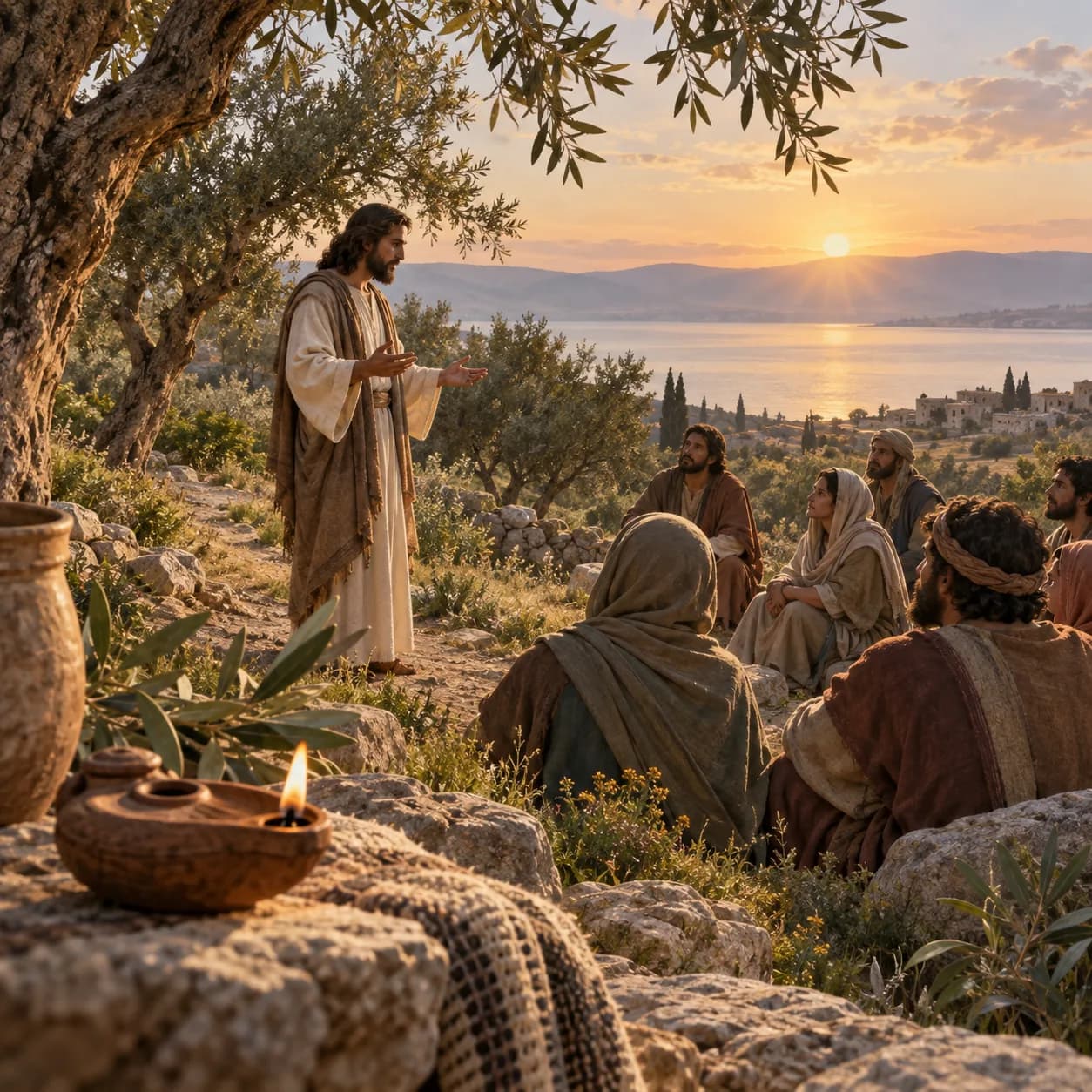
Jesus wakes up hungry. He leaves Bethany for Jerusalem, spots a fig tree in leaf from a distance — a sign, in any ancient Mediterranean landscape, that there might be something to eat — and goes to it deliberately. He finds nothing but foliage. And then he does something that has puzzled generations of readers: he pronounces against the tree a sentence that sounds disproportionate. "May no one ever eat fruit from you again." The narrator, like someone who already knows the reader will be startled, adds a note that complicates the scene even further: it was not the season for figs. If it wasn't the season, why the demand? The question hangs unresolved. Mark cuts to the temple.
It is in that suspension that the central problem of this text lives — and also its key.
A Tree Interrupted By A Temple
Mark doesn't tell the fig tree story all at once. He splits it in half and inserts the temple episode into the gap. Jesus curses the tree (11:12–14), enters Jerusalem, drives out sellers and money changers from the temple, quotes Isaiah and Jeremiah (11:15–17), and only the next day, on the way back into the city, do the disciples see the fig tree "withered from the roots" (11:20). This interweaving — scholars call it a Markan sandwich — is not a decorative device. It is a reading instrument. Mark is saying, without saying it: read one scene through the other.
On its own, the fig tree would be a strange, almost embarrassing episode — an itinerant prophet taking out agricultural frustration on a tree that, by the narrator's own admission, owed no fruit at that time of year. On its own, the temple would be a scene of religious indignation, set against commercial frictions plausible in any sanctuary with heavy pilgrim traffic. But the two scenes, folded over each other, produce a third meaning that neither one sustains alone: there are leaves without fruit, and there is a temple bustling with activity without fulfilling the purpose for which it was built.
Matthew, in retelling the same episode (21:18–22), undoes the sandwich. In his version the fig tree withers instantly, before the disciples, who marvel immediately; the teaching on faith, prayer, and mountains that move is attached directly to the scene, with no gap. This is a compositional choice, not a dispute over facts: Matthew wants a quick didactic effect; Mark wants the reader to walk inside the riddle before receiving it resolved. Recognizing this compositional difference avoids two symmetrical traps: harmonizing the gospels until what each one is doing is erased, or pitting them against each other as if they were competing reports of the same observable fact.
What A Fig Tree Meant Before Jesus Reached It
No one in the first century would hear "fig tree" as a neutral botanical fact. In Israel's tradition the tree carries, on one hand, the image of messianic peace — "each one under his own vine and fig tree" — and, on the other, the opposite image: barrenness, ruin, judgment. Jeremiah speaks of a people who yield no figs where figs should be; Hosea and Micah use the same tree to describe disappointment and emptiness. When Jesus approaches a fig tree full of leaves and finds no fruit, a reader formed by these Scriptures already knows he is facing more than agriculture. He is facing a sign with its own vocabulary, a vocabulary the prophetic tradition had already taught how to decipher.
That is why the explanation "it was not the season for figs" should not be read as an attempt to soften the scene, nor as proof that Jesus acted without reason. The detail works the other way: it heightens the discomfort, because it makes clear that the narrative's interest lies not in correcting a botanical misunderstanding but in exploring the gap between appearance and substance. Some try to resolve the tension by suggesting that off-season leaves might signal early, edible fruit ahead of the regular harvest — not impossible, but the text doesn't need this agronomic crutch to work. Its force lies elsewhere: the tree displays signs of life without delivering what it promised.
Overturned Tables, A Double Quotation
In the temple, Jesus doesn't give a speech. He makes a gesture. He drives out those buying and selling, overturns the tables of money changers and the benches of dove sellers, and prevents — a detail Mark records that usually goes unnoticed — anyone from carrying any object through the courtyard (11:16). This is a disruption of the place's daily operation, not merely a one-time rebuke. And the gesture comes accompanied by a precise verbal interpretation: "Is it not written, 'My house shall be called a house of prayer for all nations'? But you have made it a den of robbers."
The sentence stitches together two prophetic passages, and the stitching is itself the argument. Isaiah 56:7 speaks of an open temple — "for all nations" — a horizon that exceeds the limits of any group controlling the precinct. Jeremiah 7:11 speaks of a temple that became a hideout: not necessarily the site of the theft, but the place where those who have already stolen take refuge, covering injustice with liturgy. Jesus is not making a complaint about abusive exchange rates — though that isn't excluded from the scene — he is denouncing a religious structure that offers sacred cover to a life that has strayed from the covenant. The temple keeps functioning, sacrifices continue to be offered, the traffic is heavy. And it is exactly that traffic — that appearance of religious vitality — which the fig tree, placed alongside it, helps unmask.
Leaf And Fruit As Criterion
The passage works with a pair of opposites worth naming clearly: leaf versus fruit. Leaf is visible presence, a sign that something is happening. Fruit is what verifies whether that presence fulfills its purpose. The temple had leaves in abundance — pilgrims, sacrifices, currency exchange, movement, recognized authority. What was missing, according to the judgment the scene enacts, was the corresponding fruit: true prayer, openness to the nations, justice that did not hide behind the altar.
This criterion hands the modern reader an uncomfortable instrument. It is not a generic critique of institutionalized religion, and still less an insinuation against Judaism as a whole — a reading that would badly distort the text, since Jesus speaks from within Israel's own Scriptures, citing Israel's own prophets to judge an institution of Israel. The target is concrete and delimited: the functioning of that temple, at that moment, evaluated by its own founding texts. Turning this scene into a collective accusation against the Jewish people is interpretive abuse, not reading.
But the criterion doesn't stay locked in the first century. It returns as a question whenever a religious community — including a Christian one — accumulates structure, correct language, liturgical routine, a reputation for piety, and still fails to produce what those leaves promised: prayer that is truly prayer, justice that is truly justice, hospitality that truly welcomes the outsider.
Faith That Is Not A Technique
The next day, Peter notices the withered fig tree and remarks on it, somewhat astonished. Jesus's answer slides from judgment into teaching: "Have faith in God... whatever you ask... believe that you have received it" (11:22–24), closing with the demand to forgive before praying. Matthew condenses the same material around the image of moving mountains.
It is tempting — and it is one of the most common and most mistaken uses of this passage — to read these lines as a kind of mechanics of faith: believe hard enough and reality bends to your will. The context itself blocks this reading. The faith spoken of here does not appear in isolation; it is bound to prayer and, even more explicitly, to forgiveness. The mountain is a figure of speech for what seems impossible to human eyes, not a promise of magical control over circumstances. Reading Mark 11:23 as a prosperity formula means lifting a verse out of the block that gives it meaning and ignoring exactly the frame — judgment on empty religion, followed by a call to a faith that forgives — that the gospel builds around it.
It's worth noting that the parable recorded in Luke follows a very similar logic, though with a different outcome: an owner plants a fig tree, comes looking for fruit for three years, finds none, and orders the tree cut down — but the gardener intercedes, asks for more time, promises to dig around it and fertilize it. The comparison does not serve to harmonize the two texts as if they were the same scene narrated differently; these are distinct literary units, of distinct genres — parable on one side, narrated episode on the other. What the comparison reveals is rather a vocabulary shared by the Jesus tradition: the fruitless fig tree as a figure of imminent judgment, and the possibility, always conditional, of a reprieve. In Luke that reprieve is granted, though under a deadline. In Mark, the tree receives no such interval — it withers in the same movement in which it is cursed, with no gardener to intervene. The difference is not a compositional accident; it is part of what each text wants to say about the moment in the narrative where it stands.
This absence of intercession in Mark gains weight when we look at where the episode sits within the gospel. The cursing of the fig tree happens after Jesus's entry into Jerusalem, on the eve of the passion, at a point in the narrative where deadlines granted elsewhere already seem to have run out. Luke places his parable earlier in the ministry, still open to the possibility of conversion — the gardener asks for time precisely because there is time to ask for. Mark, by contrast, writes the scene of the withered fig tree as someone already describing the end of a deadline, not its beginning. This reading requires no chronological harmonization between the two accounts, nor does it assume they refer to the same agricultural event; it merely observes that the synoptic tradition had more than one way of narrating judgment on fruitlessness, and that each evangelist chose the form that served the narrative moment in which he placed it.
This distinction also helps explain why Mark refuses any escape valve for the reader. If there were, within Mark's own account, a character interceding for the fig tree — like Luke's gardener — the scene would offer a way out, a gesture of mercy within the narrative itself that would relieve the weight of judgment on the temple. Mark builds no such way out. The tree simply withers, with no plea, no extended deadline, and the text moves straight into theological explanation through faith and forgiveness — not as a loophole that cancels the prior judgment, but as a response on the side of the hearer, not on the side of the condemned tree. It is this unbroken sequence, with no advocate, no second chance within the scene, that sets the stage for asking more rigorously what, in the end, Mark's text allows us to affirm with confidence and where its evidence runs out.
What The Text Allows Us To Say, And What It Does Not
The textual evidence firmly supports that Mark organizes the fig tree and the temple as a single interpretive act, and that the quotation from Isaiah and Jeremiah supplies the theological key to the temple scene. It also supports that Matthew works the same tradition toward a different redactional purpose, without this implying invention or factual contradiction between the accounts — these are two ways of narrating a single received core.
What the evidence does not settle is the underlying historical question: whether the episode reflects the memory of a real gesture by Jesus, later shaped by the community's reflection in light of Scripture, or whether it was born already as a full theological composition. Both hypotheses remain open, and neither can be presented as certain. The same holds for the temple commerce: the text is not an economic report, and reconstructing with precision the commercial practices being criticized requires a caution the gospels, by their very nature, do not offer.
Also unsustainable is reducing the scene to a pure symbol unmoored from any event — as if the fig tree were merely an abstract moral illustration, with no relation to Jerusalem, to the temple, to an actual Jesus walking between Bethany and the city. The gospel does not deal in generalities; it names a place, quotes specific texts, stages a public gesture.
The tree withered to the root is not the end of the story, but its hinge: the moment where judgment and teaching meet, and where the reader is invited to ask, about his own religious life, whether there are leaves covering an emptiness where fruit should be — prayer that truly prays, forgiveness that truly forgives, a house that remains, as promised, a house of prayer for all.
Sources Of This Text
Primary basis: Mark 11:12–25; Matthew 21:18–22. Biblical text. The literary observations refer to the passages indicated; the applications drawn from the Memra are editorial interpretations.
This essay focuses on the comparative reading of the biblical text. It does not present archaeological verification or an independent reconstruction of the episode.
Related biblical source already cited in the dossier: Luke 13:6–9.
Continue the study in Memra
Read the complete course with progress tracking and connected references.
Open the course