The Father and His Two Sons: Loss, Welcome, and Resentment
From the series The Bible Is Not Literal, published by Memra.
The Musician Who Doesn't Enter
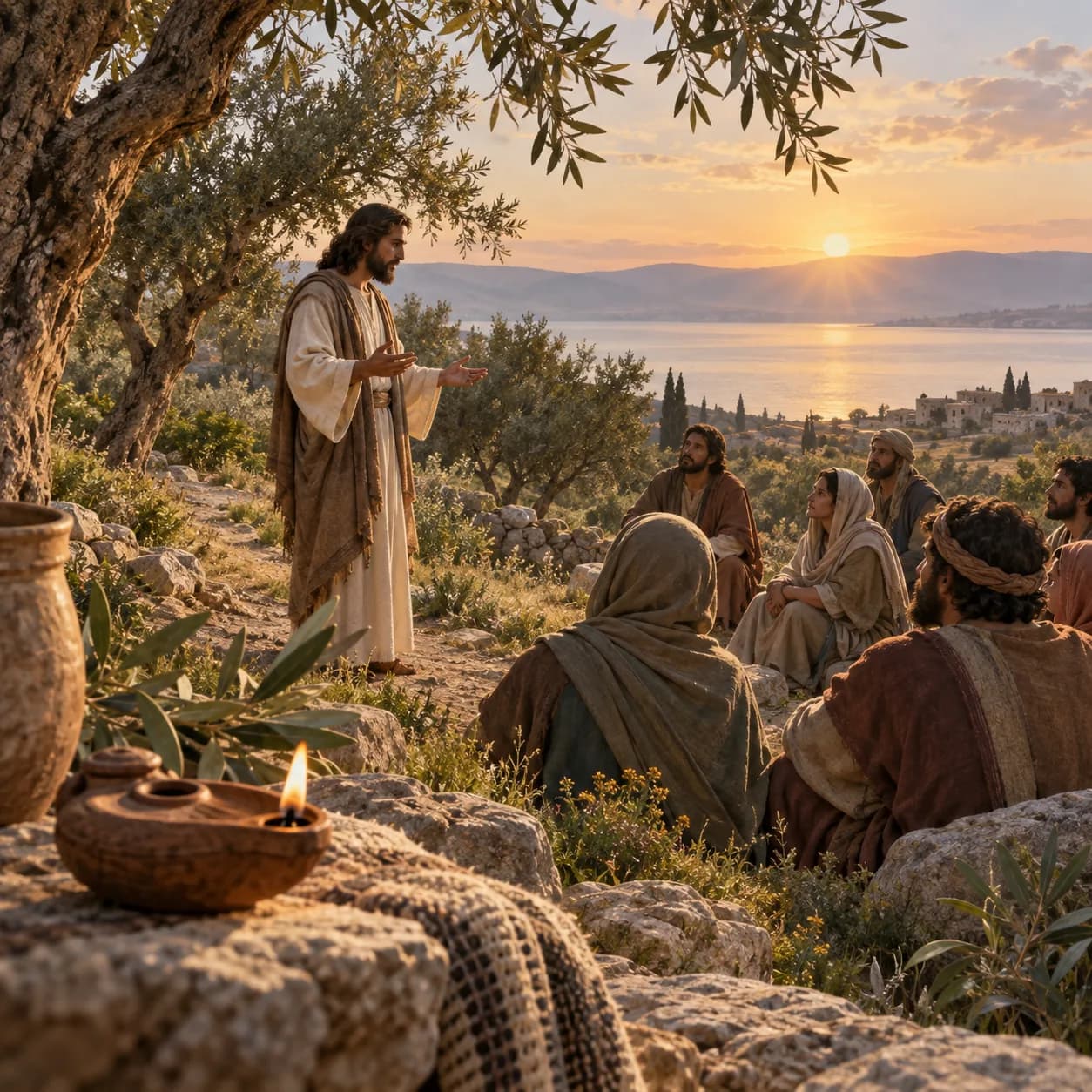
He is in the field, coming back from work, when he hears the music. He doesn't yet know the reason for the celebration — he has to ask a servant, like a stranger in his own house. The answer is curt: his brother has come back, and his father has killed the fattened calf because he got him back safe and sound. At that moment, the elder son stops. He doesn't go in. The house is full of people celebrating, and he stays outside, listening through the walls to a joy he takes no part in.
It's a strange scene to end a parable about mercy with. Jesus could have closed the story with the embrace, the new robe, the ring, the feast — a rounded ending, with nothing left over. But Luke 15 doesn't end there. The camera shifts outward, to the son who never left home and who, precisely because of that, finds himself a stranger at the moment of rejoicing. The parable of the two sons is not about one lost son. It is about two ways of being lost, and about a father who leaves the house twice to go looking for each of them.
The House That Empties Out
The story opens with a brutal request: "Father, give me the share of property that is coming to me" (Luke 15:12). To ask for one's inheritance while the father is still alive is, in effect, to treat the father as already dead. There's no need to reconstruct with ethnographic precision the inheritance customs of the first century to feel the violence of the gesture: the narrative itself exposes it through the father's silence, who divides the property without a single recorded word of protest. That absence of any reply is already telling. The text spends no energy justifying why the father yields; it simply follows the son, who "gathered all he had and took his journey into a far country, and there wasted his substance with riotous living" (v.13).
The fall is quick and narrated with cruel economy: famine, want, a job feeding pigs — an unclean animal for a Jew, though the text doesn't need ritual symbolism to make the reader feel the bottom of the pit. The next image is enough: he longs "to fill his belly with the husks that the swine ate; and no man gave unto him" (v.16). The hunger is as literal as the loneliness.
And then comes the verb around which the whole turn of the story is organized: "he came to himself" (v.17). This is not exactly moral repentance in the devotional sense sometimes projected onto the text — it is, first, a survival calculation that turns into something else. He plans a speech: confess the sin, give up the title of son, ask only to be treated as one of the hired hands. It's a modest plan, almost mercantile: trading dignity for bread.
What The Father Does Before A Single Word
The scene of the return is the most quoted in the parable, and for good reason: "when he was yet a great way off, his father saw him, and had compassion, and ran, and fell on his neck, and kissed him" (v.20). Notice the sequence: the father sees him from a distance — which suggests he had, in some sense, been watching for him. He runs — a gesture that, in a culture of patriarchal dignity, would normally have fallen to the inferior to make toward the superior, not the other way around. And he embraces and kisses him before hearing a single word of the prepared speech.
The son begins his rehearsed line — "Father, I have sinned against heaven, and in thy sight, and am no more worthy to be called thy son" — but he is cut off. The text never records him actually voicing the request to be treated as a servant. The father is already giving orders: the best robe, the ring, the sandals, the fattened calf, the feast, "for this my son was dead, and is alive again; he was lost, and is found" (v.24). The restoration is total and public — robe, ring, and sandals are signs of status, not of bare survival. The father does not take back an employee. He reinstates a son.
It is this excess that makes the first half of the parable so unsettling. It does not describe a calculated forgiveness, proportional to a demonstrated repentance. It describes a generosity that acts before merit can even be assessed.
The Other Distance
If the parable stopped at verse 24, it would be a lovely story about mercy with no further interpretive cost. But Luke extends it, and it is in that extension that the real target of the teaching lies. The elder son comes back from the field, hears the music and dancing, and asks a servant what is happening — as though he, who never left, were now the outsider. On learning the reason, "he was angry, and would not go in" (v.28).
The father leaves the house a second time. Before, he had run to meet the one returning from far away; now he goes out to plead with the one who is close by and refuses to enter. It is the second paternal movement of the parable, and perhaps the more demanding one: the same initiative, now directed at a son who never physically left home, but who turns out to be just as distant on another plane.
The elder son's answer is the moment the parable reveals its true architecture. He does not call his brother "brother": "this thy son, which hath devoured thy living with harlots" (v.30) — the distance is marked even in the grammar. And his complaint lays out a precise ledger: "these many years do I serve thee, neither transgressed I at any time thy commandment: and yet thou never gavest me a kid, that I might make merry with my friends" (v.29). He speaks the language of wages, not the language of sonship. He served, obeyed, waited for proportional reward — and got not even a kid, while the prodigal brother receives a fattened calf for having come back after destroying everything.
The father's answer neither invalidates the complaint nor fully grants it: "Son, thou art ever with me, and all that I have is thine. It was meet that we should make merry, and be glad: for this thy brother was dead, and is alive again; and was lost, and is found" (vv.31-32). Note the subtle correction: the father hands back to the elder son the very word he had refused to use — "thy brother." And note too that the father does not dispute the merit: he acknowledges that everything he owns already belongs to the elder son, who never needed to bargain for anything. The problem was not the absence of material reward. It was the inability to understand his own position as sonship, rather than as employment.
Two Ways Of Being Lost
The power of the parable lies in its refusal of an easy symmetry between the two sons. The younger got lost through visible dissipation: he left, he spent, he sank. The elder never left home, but lived beside his father as one fulfilling a labor contract — present in space, absent from the relationship. One needed to come back; the other needed to leave a confinement he had never even recognized as a prison.
This reading does justice to the fact that Luke places the parable inside a concrete controversy. The chapter opens with Pharisees and scribes grumbling because Jesus "receiveth sinners, and eateth with them" (Luke 15:1-2). The three stories of loss and recovery — the sheep, the coin, the two sons — answer that accusation. The first two end in shared joy without resistance: the shepherd calls his friends, the woman calls her neighbors, and no one refuses to join the celebration. It is only in the third story, longer and more heavily laden with direct speech, that resistance appears — because it is only there that the listener finds a character in whom the Pharisees and scribes might recognize themselves. The elder son is not ridiculed as the villain of the plot. He is the figure through whom the parable directly confronts whoever is listening to it.
This does not, however, license a reading that turns "the elder son" into a generic cipher for Jews in general, as if the parable were an ethnic accusation. The text is working with a specific controversy — Jesus's open table with tax collectors and sinners — and uses the character to expose a broader human temptation: measuring the value of one's own faithfulness against the apparent unfairness of grace granted to someone else.
The Ending That Never Comes
The most disturbing detail of the parable is structural: it ends without our knowing whether the elder son goes in to the feast. The father speaks his final word, and the text stops. There is no narration of reconciliation, nor of definitive refusal. Luke builds an open ending exactly where one would expect closure.
This openness is not an accidental gap left by a careless narrator — it is the point of the story. While the two previous parables close with unanimous celebration, the third leaves the decision suspended precisely because the one who needs to decide is not a character within the narrative, but whoever is listening to it. The Pharisees and scribes who were grumbling at the start of the chapter are invited, through the elder son, to supply the ending with their own response.
It's worth noting how the request for the inheritance and the elder son's complaint share the same grammar, inverted in sign. The younger treats the father as a source of goods to be extracted and then abandoned; the elder treats the father as an employer who owes payment for services rendered. Both, in their own way, reduce the filial relationship to a transaction — one through the predatory anticipation of inheritance, the other through the calculated expectation of wages never received. This hidden symmetry is what makes the father's answer in verse 31 so precise: "all that I have is thine" is not merely comfort, it is the revelation that the elder son already possessed, by right of sonship, everything he was trying to obtain by merit. He was asking for a kid when the whole flock already belonged to him — the mistake was not wanting to celebrate, but not knowing that the celebration had never depended on asking.
This inversion helps explain why the text avoids giving the elder son any final reply. After the father's speech, there is no "and the son went in" nor "and the son refused to enter." The narrative silence hands back to the elder son exactly the kind of choice he never had to make during his years of obedient service: to decide, with no paternal order and no calculation of reward, whether to enter out of love for his recovered brother or to remain outside, clinging to his own standard of justice. It is a deliberate and ironic inversion — the son who never disobeyed a single order is, in the final scene, left with no order at all, and what he does with this unprecedented freedom will reveal whether his earlier obedience was sonship or merely duty well performed.
This final ambiguity also casts new light, retroactively, on the opening scene in the field. The elder son "was in the field" (v.25) when he heard the music — at the exact moment of the celebration, he was occupied with precisely what had defined his identity throughout the whole parable: work. It is no accident that the news reaches him in the middle of labor, nor that his first reaction is to ask a servant, placing himself, for a moment, on the same relational level he himself may have assigned to his own role in the household. The text doesn't need to state this explicitly; the scene does it through composition. And it is exactly this detail — a son arriving from work to discover a feast he neither organized nor anticipated — that prepares the ground for the next section, where it becomes necessary to recognize the limits of what the parable does, and does not, set out to resolve.
What Remains Open
It's worth marking the limits of what this text can bear. The parable does not deal with situations of abuse or violence, nor does it offer a generic model for every ruptured family reconciliation — there are losses that require time, mediation, concrete reparation, and instant return to full fellowship is not the only legitimate path to healing. Nor does the father's gesture amount to saying that the younger son's waste was irrelevant: the feast celebrates the life recovered, it does not erase the road that led to the pigsty.
And the elder son's protest, however much the parable disarms it, is not treated as ridiculous. His pain has real weight: years of silent faithfulness, no feast of his own, the sense of having been invisible precisely for never having caused trouble. The text does not deny that wound. It simply refuses to let it serve as a reason to stay outside, listening to the music through the wall, while the father insists, for the second time that day, on going out to fetch the one missing from the table.
Sources Of This Text
Primary basis: Luke 15. Biblical text. The literary observations refer to the passages indicated; the applications of the Memra are editorial interpretations.
This essay focuses on a comparative reading of the biblical text. It does not offer archaeological verification or an independent reconstruction of the episode.
Related readings cited in the dossier: Luke 7:36–50; Matthew 18:21–35; Luke 18:9–14.
Continue the study in Memra
Read the complete course with progress tracking and connected references.
Open the course