Lazarus: Life, Grief, and the Last Sign
From the series The Bible Is Not Literal, published by Memra.
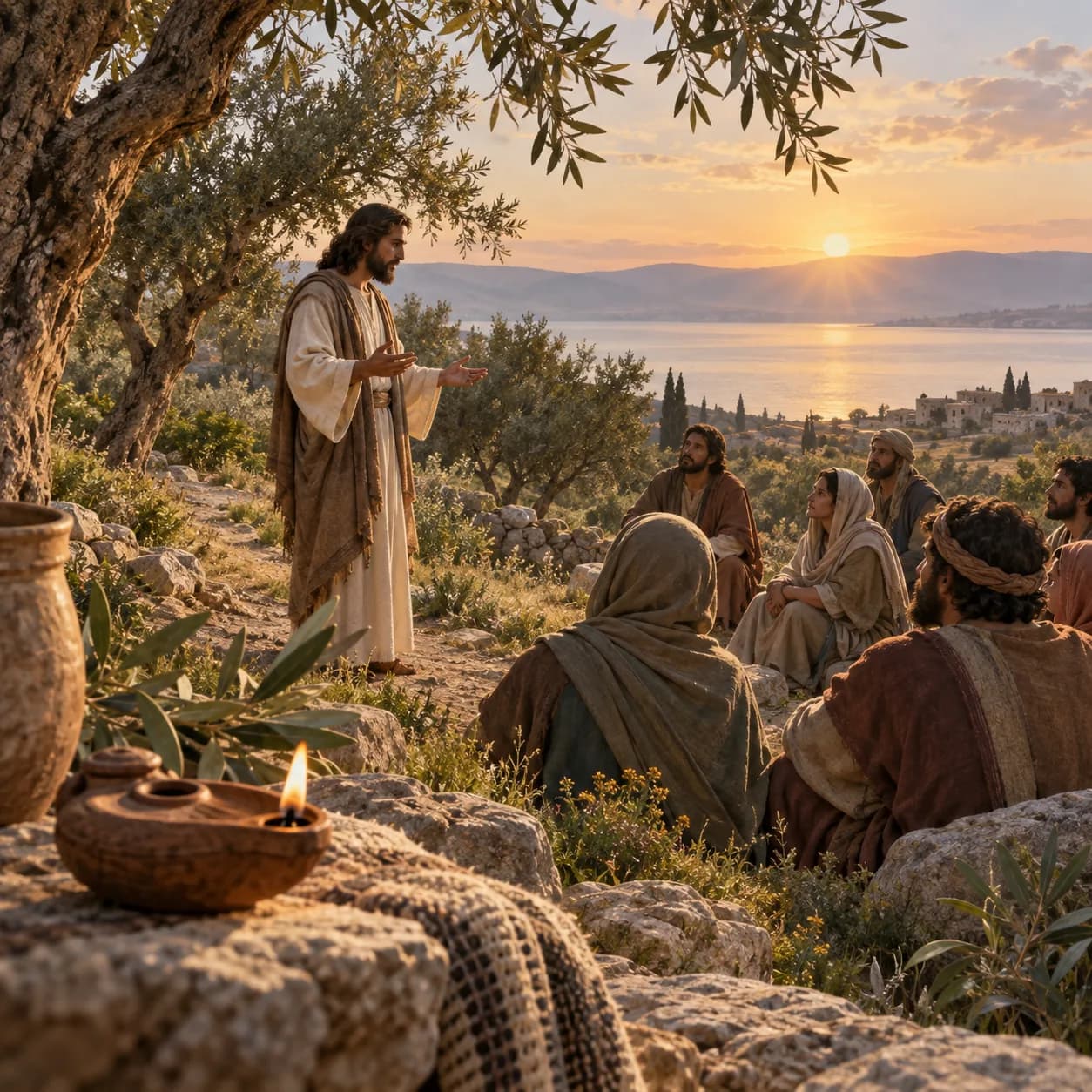
The Tomb Already Sealed
Martha speaks the most honest line of the chapter before she even reaches Jesus: "Lord, if you had been here, my brother would not have died" (John 11:21). Mary repeats the exact same words a few verses later (11:32). This is no accident of composition — it is the refrain of two people who have done the math alone over the previous days, watching the road Jesus should have come down and didn't. When he finally arrives in Bethany, Lazarus has been dead four days. The account leaves no room for ambiguity about that timeframe, and this is precisely where the chapter's theological problem lives: why did Jesus, who loved this family, choose to arrive late?
The question is not rhetorical. The text itself places it at the center of the narrative and refuses to answer it with a reassuring explanation.
A Delay The Text Does Not Disguise
John 11 opens with news of Lazarus's illness and Jesus's response: "This illness does not lead to death; rather it is for God's glory, so that the Son of God may be glorified through it" (John 11:4). So far, everything points toward a quick happy ending — the kind of promise fulfilled within a few verses, as happens in other healings in the Gospels. But the narrator interrupts this expectation with a sentence that sounds almost broken: "Now Jesus loved Martha and her sister and Lazarus. So when he heard that Lazarus was ill, he stayed two days longer in the place where he was" (John 11:5-6). Love is affirmed, and immediately afterward, it contradicts what one would expect from it. There is no attempt to smooth over the juxtaposition. It is as if the text itself wants the reader to feel the discomfort before any resolution.
This delay changes the genre of the story in progress. While Lazarus still breathed, Jesus could have healed him — as he did for so many others from a distance. By waiting, he transforms the possibility of healing into the necessity of resurrection. The journey the disciples dread, because Judea is hostile and dangerous (John 11:8), only happens after death is already an accomplished fact. Jesus knows this before he arrives: "Our friend Lazarus has fallen asleep, but I am going there to wake him up" (11:11) — words the disciples take literally, and wrongly, until he has to say it without metaphor: "Lazarus is dead" (11:14).
Two Conversations, Two Words Of Faith
Martha goes out to meet Jesus even before he enters the village; Mary stays home. This difference in movement already signals distinct narrative personalities, and the dialogue that follows with Martha is the chapter's densest theological moment. After voicing her complaint — "if you had been here" — she adds, unprompted: "But even now I know that God will give you whatever you ask of him" (John 11:22). It is a faith that holds on despite the pain, yet still uncertain of what it can expect.
Jesus answers with a promise she interprets through the lens she already knows, that of current Jewish eschatology: "I know that he will rise again in the resurrection on the last day" (11:24). It is a theologically correct answer and, at the same time, a distant one — comfort deferred to an indeterminate future. Jesus does not correct her, but shifts the center of the conversation: "I am the resurrection and the life. Those who believe in me, even though they die, will live, and everyone who lives and believes in me will never die. Do you believe this?" (11:25-26). The final question is direct, almost abrupt. Martha responds with a confession that sounds more like a repeated conviction than full comprehension: "Yes, Lord, I believe that you are the Messiah, the Son of God, the one coming into the world" (11:27). She professes before seeing the sign — her faith precedes the evidence.
Mary, when she finally comes out, repeats Martha's same line ("if you had been here, my brother would not have died," 11:32), but falls at Jesus's feet. There is no theological dialogue with her. There is only the scene that follows, and that scene is the chapter's other center.
Weeping Before The Miracle
"When Jesus saw her weeping, and the Jews who came with her also weeping, he was greatly disturbed in spirit and deeply moved" (John 11:33). The Greek verb behind this "deep disturbance" carries, according to many readers of the text, an almost physical force — something close to indignation or intense inner shaking, not merely gentle sorrow. Jesus asks where they have laid him, they ask him to come and see, and then comes the shortest verse in the Gospels: "Jesus began to weep" (11:35).
It is a verse that resists any reading that reduces the episode to a display of power. If Jesus already knew he would raise Lazarus minutes later, why weep? The narrative does not explain, and this absence of explanation is the very point. The weeping is not staging, nor a dramatic prologue to the miracle — it is a genuine response to the reality of death, even from the one about to reverse it. Onlookers react in two ways: "See how he loved him!" and, in skeptical counterpoint, "Could not he who opened the eyes of the blind man have kept this man from dying?" (11:36-37). The doubt is recorded, without immediate answer — another sign that the text is not interested in eliminating every objection before moving on.
Four Days, A Smell, And A Command
At the tomb, Martha interrupts Jesus's request to remove the stone with a practical observation, almost shocking in its bluntness: "Lord, already there is a stench because he has been dead four days" (John 11:39). It is the most physical detail in the entire account, and its function in the narrative structure is to block any reading that treats the episode as a prolonged faint or a clinical misunderstanding. The text insists on the timeframe — four days — precisely to close that door.
Jesus answers by recalling the initial promise: "Did I not tell you that if you believed, you would see the glory of God?" (11:40). He prays aloud, thanking the Father for having already been heard — another temporal inversion suggesting the decision had already been made before the public prayer, addressed less to God and more to the crowd watching (11:41-42). Then he cries out: "Lazarus, come out!" (11:43). And he comes, "his hands and feet bound with strips of cloth, and his face wrapped in a cloth." The episode's final command is not directed at Lazarus, but at the surrounding community: "Unbind him, and let him go" (11:44). The sign does not end with the body rising on its own; it ends with other hands completing the gesture.
A Sign That Hastens The Cross
The chapter does not close in celebration. Many of those who witnessed it believe, but others go report the episode to the Pharisees, who convene the Sanhedrin: "What are we to do? This man is performing many signs. If we let him go on like this, everyone will believe in him, and the Romans will come and destroy both our holy place and our nation" (John 11:47-48). Caiaphas then pronounces the sentence the narrator reads as unwitting prophecy: better that one man die for the people (11:49-50). From that moment, the text records, they plan to kill him (11:53). The raising of Lazarus, far from resolving the story's tension, is the trigger that drives it toward the cross. In John, giving life to one man costs Jesus his own.
What Remains Out Of Reach
There is no way to verify externally Lazarus's condition before burial, nor to confirm independently what happened inside that tomb. Modern attempts to explain the episode as a misread coma or catalepsy run into the text itself, which actively works to exclude that reading — the detail of the smell and the four days exists precisely for this purpose. But this does not, by itself, convert the narrative into historical proof in the modern sense of the term. What can be affirmed with greater confidence is of another order: the Johannine tradition preserved this episode as the culminating sign before the passion, arranged with extreme literary care to reveal who Jesus is, not merely what he did.
The relationship to other accounts of the dead being brought to life in the Gospels — Jairus's daughter in Mark 5:21-43, the widow of Nain's son in Luke 7:11-17 — deserves caution. These are distinct traditions, with their own settings, characters, and narrative functions; thematic similarity does not license merging them into a single generalized story about "Jesus and the dead." Each evangelist builds his account with specific emphases, and John alone extends the episode into its direct political consequences.
The name Jesus uses when calling Lazarus from the tomb deserves attention not always given it. He does not pronounce a generic command over death, nor address the crowd asking for witnesses before the act — he cries out a proper name, "Lazarus, come out!", like someone calling to a person asleep in another room of the house. It is the same logic already announced to the disciples, when he said the friend had "fallen asleep" (11:11), but now stripped of any possible ambiguity: this is not sleep, it is death of four days, and still the call is personal, direct, made as one who summons someone to answer back. The Gospel records no hesitation between the command and the response — there is no verse describing the instant the body reorganizes itself, no narrative tension over whether the call will be heard. The text moves from imperative to fulfillment without interval, as if the distance between Jesus's word and death's obedience were, for the Johannine narrator, simply nonexistent.
This absence of suspense is all the more striking compared to the preceding scene, in the dialogue with Martha, where each of Jesus's statements provokes resistance, correction, or question. Martha contests the order to remove the stone; she objects with the detail of the smell; she misunderstands the promise of resurrection, placing it in a distant "last day." All the chapter's dramatic tension accumulates there, on the border between faith and doubt, between promise and evidence. But at the moment of the miracle itself, that friction disappears entirely. It is as if the text wants to mark a difference in kind: human faith, even Martha's, advances haltingly, needing questions, reaffirmations, partial proofs; the word of Jesus, when finally spoken before the tomb, meets no obstacle whatsoever in the reality it confronts. The contrast is not merely dramatic — it is an implicit claim about the nature of the authority speaking there, something no other miracle in John's Gospel articulates with such verbal economy.
It is also worth noting that Lazarus, upon coming out, is "bound with strips of cloth," unable to walk freely — the life restored still bears the visible marks of the death it came from, and it is precisely in this limited state that the community is called to act. The miracle does not return Lazarus ready and unencumbered; it returns a man who must, literally, be freed by other hands from what still binds him. This final image — real life, but still wrapped — functions as a silent counterpoint to the earlier weeping scene: if there Jesus allows himself to be affected by others' grief before acting, here he delegates part of the restorative action to the community itself, refusing to complete alone what also involves the gesture of those standing around the tomb.
What Remains After The Tomb
John 11 resists being reduced either to a spectacle of power or dissolved into pure metaphor. Martha professes faith before seeing the sign; Jesus weeps before acting; the community is summoned to unbind what is still held fast. None of these movements is decorative. Together they form a Christology that does not separate glory from grief, nor power from compassion.
The most concrete consequence for anyone reading this chapter today lies perhaps less in the spectacle of the open tomb and more in the sequence of gestures that precede and follow it: a Jesus who delays, who weeps, who asks "do you believe this?" before any proof, and who, in the end, entrusts to the community the task of unbinding the one restored to life. The text does not promise that every wait will end this way. It promises that, even before an already-sealed tomb, the presence of Christ is not indifference — it is, first, tears; then, a word that summons; and finally, human hands still needed to complete what new life requires.
Sources Of This Text
Primary source: John 11; Mark 5:21–43; Luke
Continue the study in Memra
Read the complete course with progress tracking and connected references.
Open the course