Parables
Stories that reveal the Kingdom.
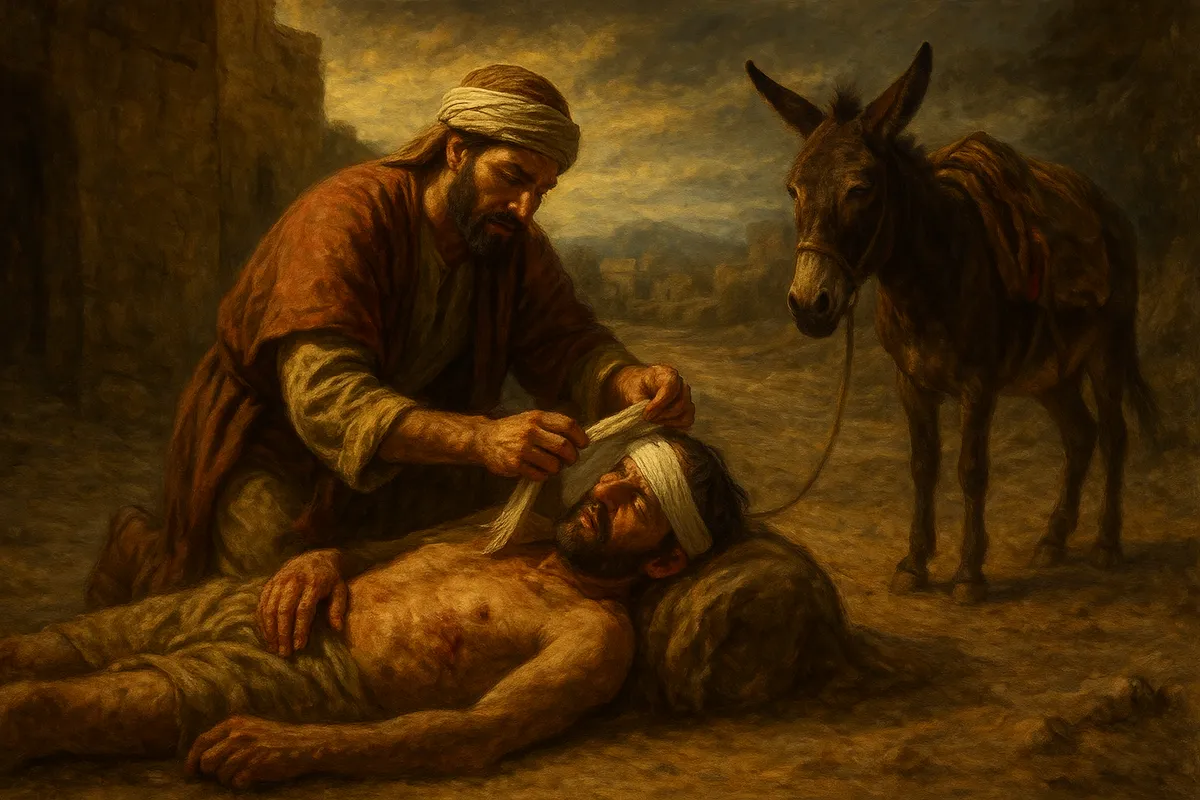
The Good Samaritan
Practical love breaks down ethnic and religious barriers.
1. Historical-Scientific Aspect
Ethnic Hatred: Jews and Samaritans were mortal enemies since c. 722 BC (racial/religious mix). Calling a Samaritan 'good' was an offensive oxymoron. Ritual Purity: Priest and Levite avoided the man (who seemed dead) so as not to become ritually unclean (Nm 19:11), prioritizing ritual over life.
2. Theological Aspect (Universal Basic)
The coroner's question was 'Who is my opponent/limit?'. Jesus turns it around: 'Who do you become close to?'. The Kingdom is not about correct theology (the Samaritan had 'wrong' theology for the Jews), but about active compassion. Kingdom ethics are universalist, not tribal.
3. Counterpoints and Misinterpretations
Excessive Allegorization: Augustine saw the Samaritan as Jesus, the donkey as the incarnation, the inn as the church. This steals the ethical social impact: the call to love the concrete enemy.
See the full explanation above.
Still have a question about this?
Take your question to Memra and see what Scripture says, where interpretation is involved, and where there is no biblical basis.
The question opens pre-written in the chat. Review it before sending.